Pitch calling
A pitch calling system the other team cannot read.
The coach picks the pitch and the location. The catcher's watch shows both. There is no finger sign, no card, and no number for the other bench to decode.
What the call has to carry
A youth pitch call is two facts. The pitch the pitcher is about to throw, and where the catcher wants it. If either one is late or wrong, the catcher is setting up for a pitch that is not coming.
Inside Glove puts both on one send. The coach watch has eight pitches:
- Fastball
- Curveball
- Slider
- Changeup
- Two-seam
- Cutter
- Splitter
- Pitchout
Location is a nine-square zone, read the way a catcher sees the plate.
- 1Up In
- 2Up Mid
- 3Up Away
- 4Mid In
- 5Heart
- 6Mid Away
- 7Down In
- 8Down Mid
- 9Down Away
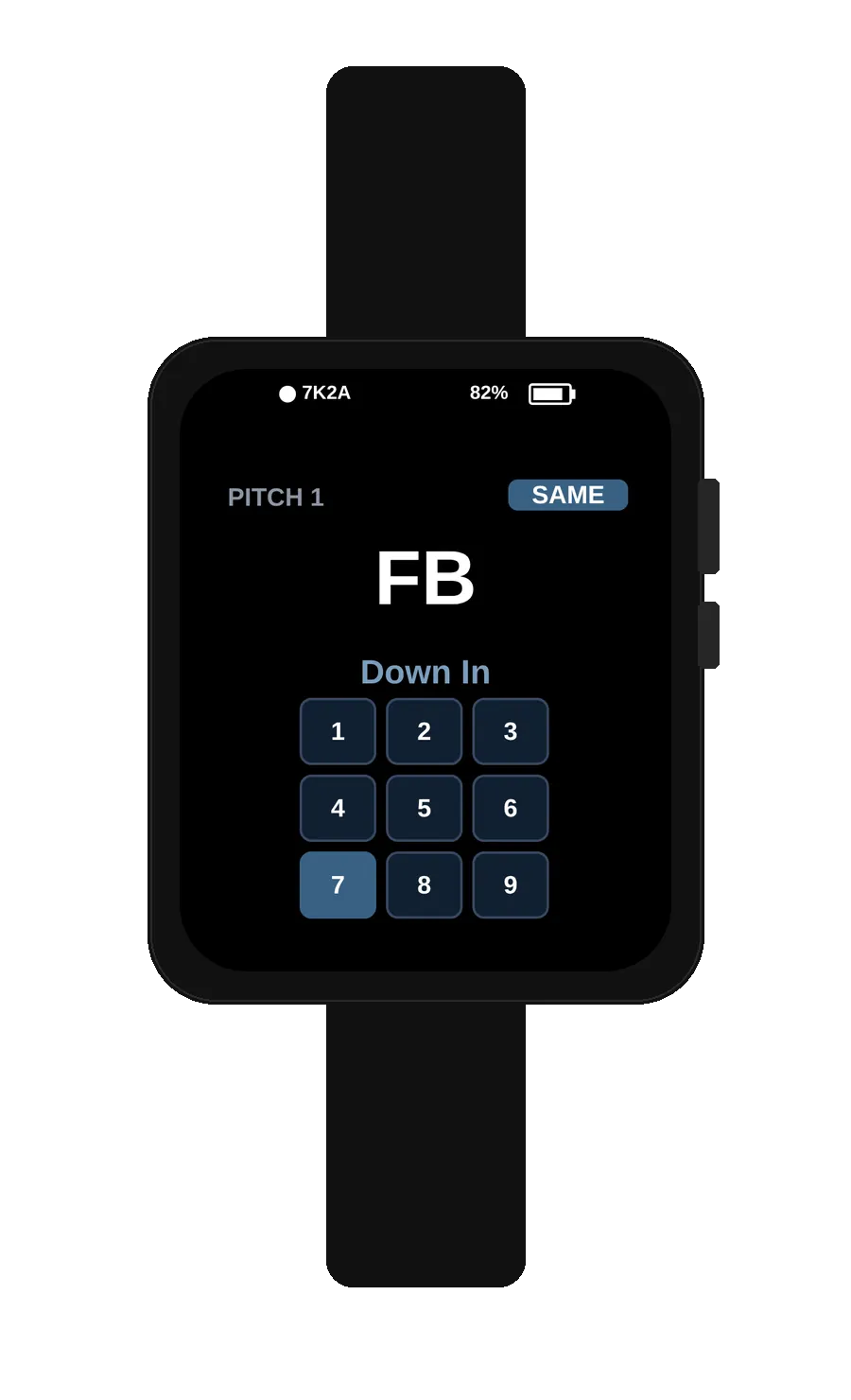
Zone 7 is down and in. That is the square that lights on the catcher's watch when the coach sends it.
Where the usual call breaks
Finger signs between the catcher's legs are a code with a sight line. A runner on second, the first-base coach, and the other bench can all watch the sequence. Once someone writes it down, the indicator does not protect you for long.
A wristband moves the code to the pitcher. The sheet is still a shared key. A card or a number held up in the dugout is a sign the whole field can see. Each of those methods gives the other team something to study. How stolen signs actually get read is the longer version of that problem.
How the two watches call a pitch
- One watch is set to Coach. The other is set to Catcher. That is the first tap on both.
- The coach watch shows a room code. The catcher types it and joins. The two watches are paired for that game.
- The coach taps the pitch, then the zone, and sends. The catcher's watch lights the call.
- SAME on the coach watch repeats the last call when the next pitch is the same one.
The screen faces the catcher. Nothing is shouted, and nothing is held up. In a Little League game the coach sends from the dugout. The published rule for that setup is on the electronics rules page. The button-by-button version is the watch manual.
Who it is for
A coach who calls pitches, and a catcher who has to receive them without turning the call into a sign. The pair is built for youth baseball, including Little League teams whose league allows a one-way display to the catcher.
It is not a device for the pitcher, the shortstop, or the base coaches. One person sees the call. The catcher still gives the pitcher a target the usual way, with the glove.